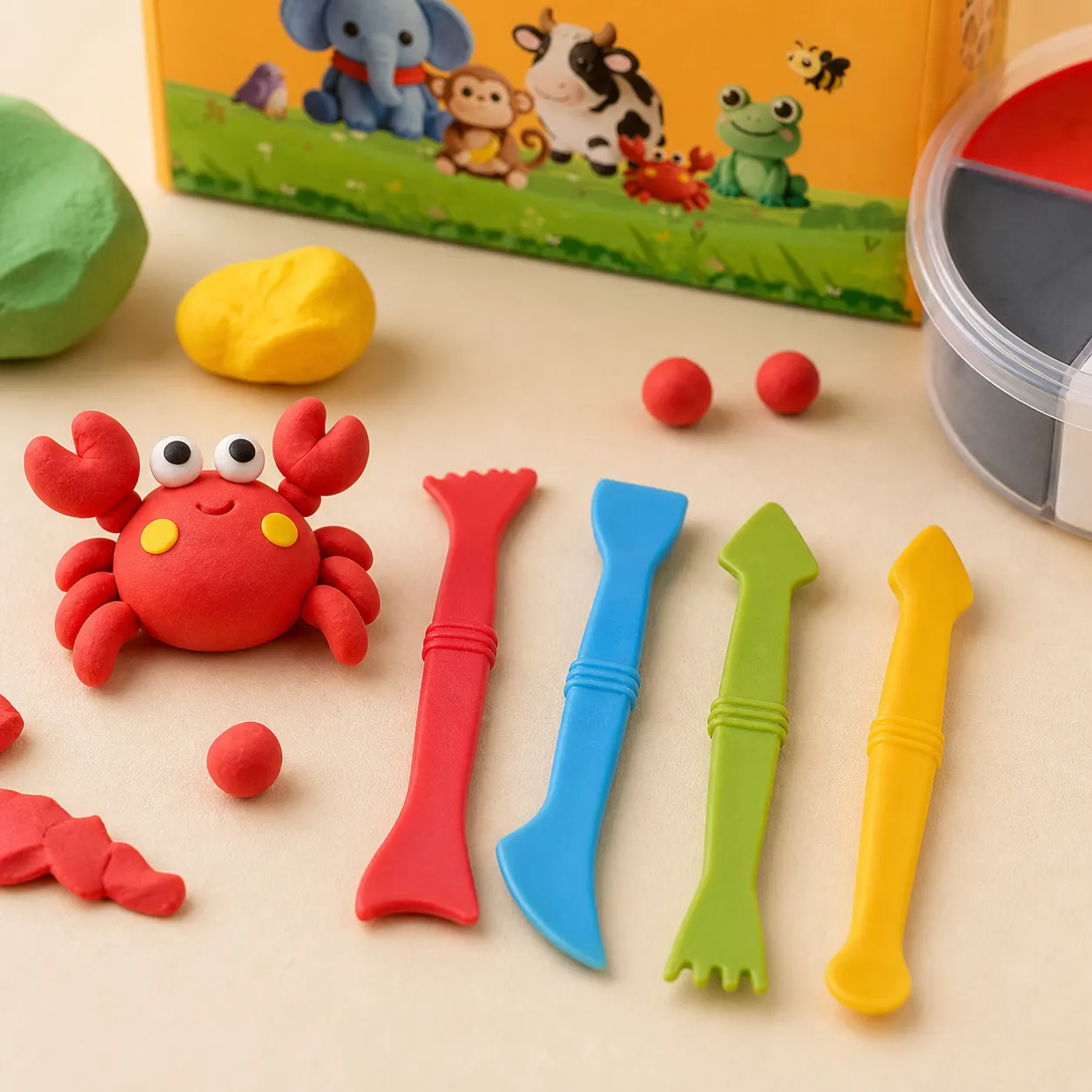
Short answer: A kids craft clay set with animals makes sense when the child wants a hands-on activity and the adult wants a clear theme to start from. The Airclay page identifies a 24-colour lightweight animal modelling clay set in a colour-box package. That supports a simple animal-making session or a craft gift. It does not confirm age suitability, non-toxicity, included tools, instructions, drying time or finished-model strength. Treat the product as the documented material set it is, then decide whether the child and the planned table activity need anything the page does not specify.
Buy for the activity, not the keyword
The phrase kids craft clay set animals describes an activity as much as a product. A buyer should ask whether the child wants to shape animals, follow a template, decorate a surface or make something that hardens. The confirmed page supports the first of those jobs: lightweight animal modelling clay with 24 colours.
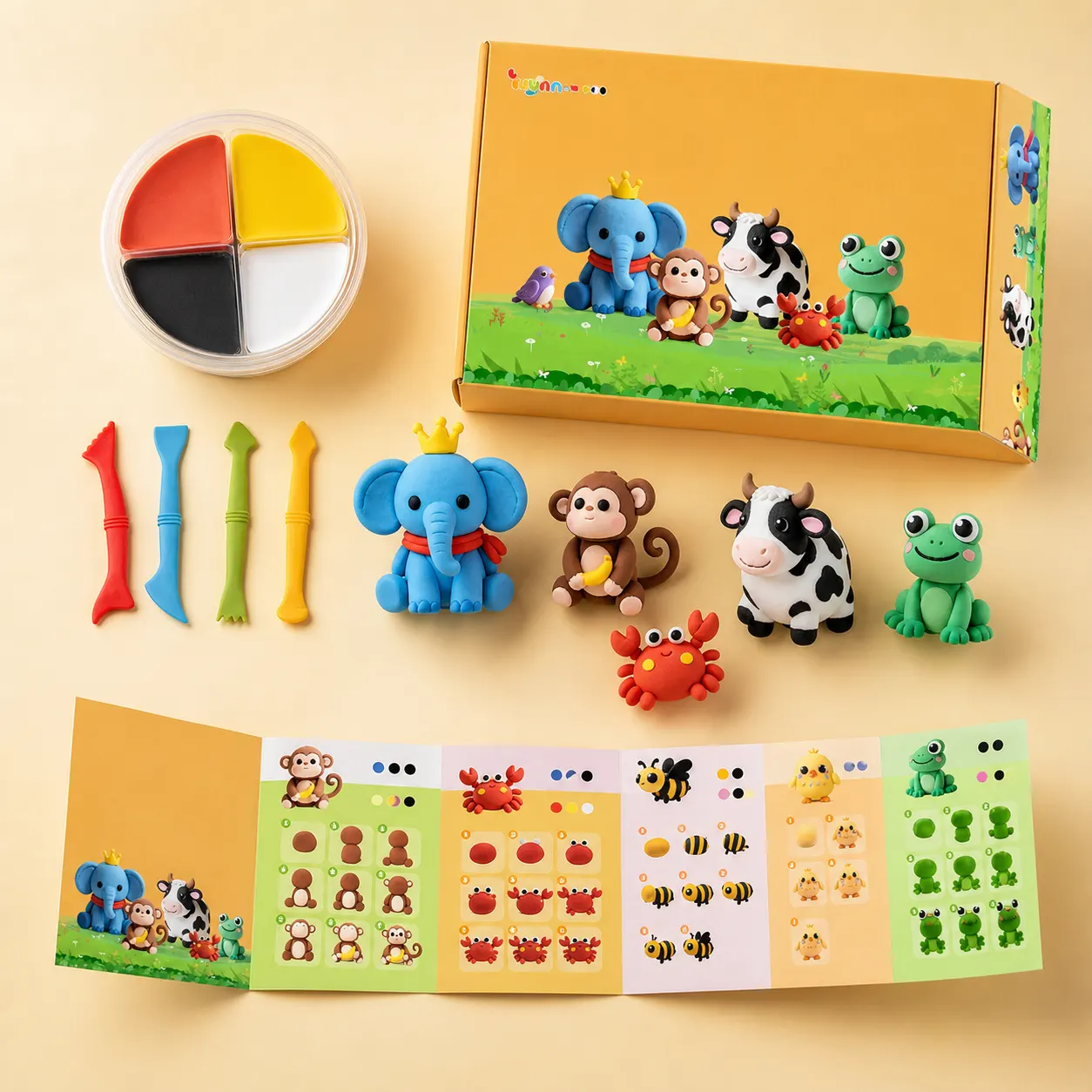
That boundary keeps the gift expectation realistic. The page does not document a workbook, moulds, cutters, eyes, stands or a set number of projects. If those additions are essential, check the current offer rather than assuming a colour box contains them.
| Gift question | Page-supported answer | Still unknown |
|---|---|---|
| What is it? | Lightweight animal modelling clay | Whether it air-dries or bakes |
| Colour choice | 24 colours | Amount in each colour |
| Presentation | Colour-box package | Full accessory list |
| Finished model | No performance claim | Drying, strength and lifespan |
Make the first session easy to start
For a home craft table, give the child one animal idea and a small starting palette. A body, two ears and a tail can be enough for the first result. The 24-colour fact supports choice, while the animal theme prevents the blank-page problem that can make a new craft feel difficult.
Adult support should be based on the child, not an assumed age band. The manufacturer does not specify age suitability, non-toxicity or safe handling. Prepare the surface, keep the material away from food and supervise in line with the child's needs.
- Choose a simple animal and place only the first colours on the table.
- Read the product page for the current material and package description.
- Shape the largest form first, then add small animal features.
- Keep extra colours in the box until the child needs them.
- Do not bake, eat, wash or store the finished model in a particular way without confirmed guidance.
Check the box before calling it complete
A colour-box format may be attractive for a birthday or rainy-day present because it presents one contained activity. It does not establish that everything needed for a guided craft is inside. The page lists the product identity but does not publish a full tool or instruction inventory.
The same caution applies to results. Lightweight modelling clay is not automatically pottery clay, polymer clay or air-dry clay. The manufacturer does not specify drying time, baking temperature, final hardness, durability or display suitability. Keep the gift description at the confirmed level.
Limits and checks before buying
This set is a good shortlist candidate for a child-led animal modelling activity where colour choice and a boxed presentation matter. It is not a confirmed choice for a classroom scheme, a kiln project, an oven-bake craft, food contact or a model that must survive handling for a defined period.
The manufacturer does not specify safety certification, non-toxic status, age grading, tools, templates, quantity per colour, drying behaviour, finished strength or service life. If any of those fields decides the gift, request the answer or choose a better-documented set.
Related guides and product details
For a UK gift, describe this as a 24-colour lightweight animal modelling clay set and verify any extra requirement before ordering. Read Air-Dry Modelling Clay Set for Kids: Check the Material First for related guidance. Read How to Choose an Animal Modelling Clay Set for a UK Craft Table for related guidance. Review the documented specification on the 24-Colour Lightweight Animal Modelling Clay Set product page before ordering.
Sources and safety context
- Supports the 24-colour, lightweight animal-modelling and colour-box facts. Current Airclay lightweight modelling clay set product page.