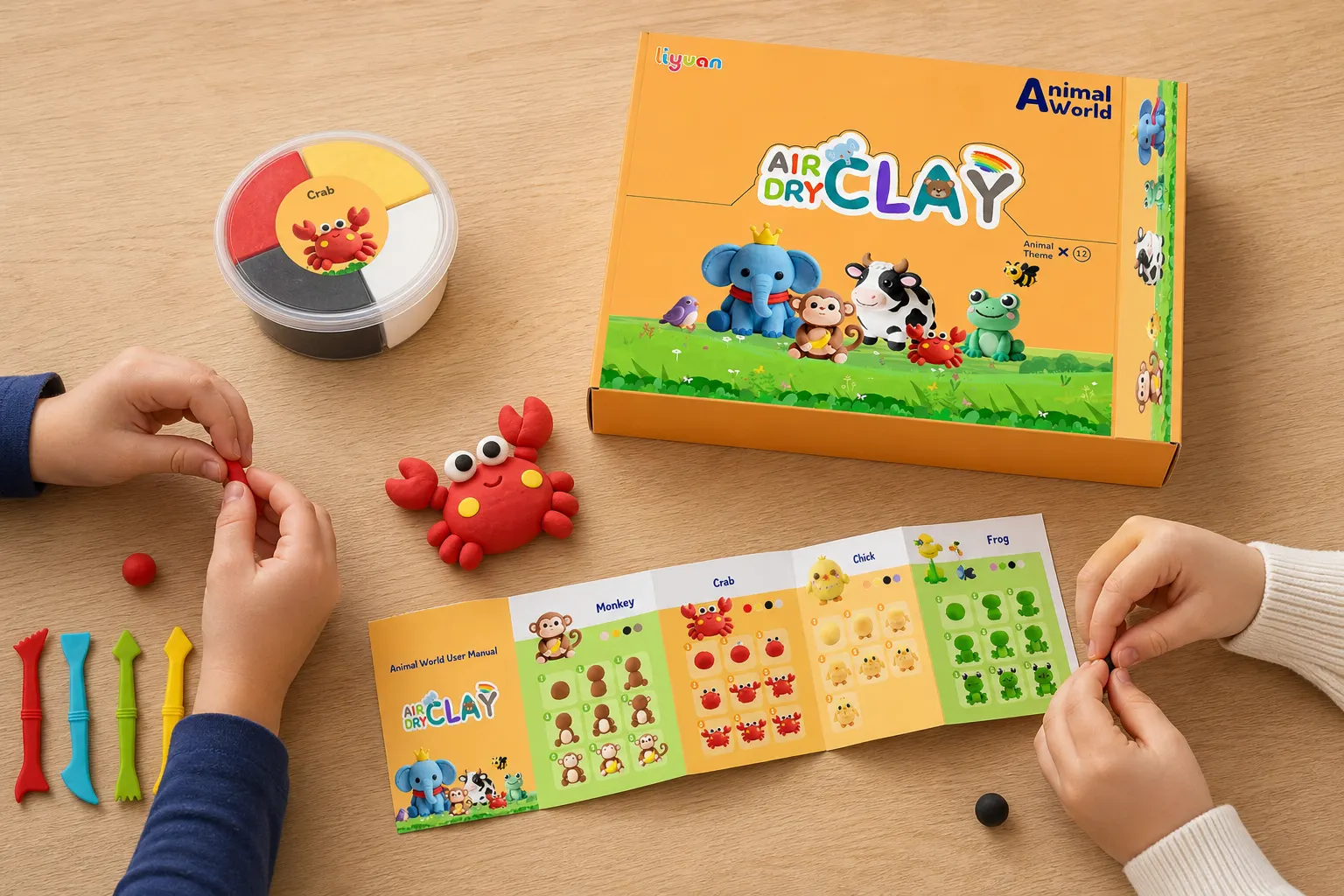
Short answer: An animal modelling clay set can be a useful choice when a child wants to shape small creatures and the adult wants a colour-led activity with an obvious theme. The Airclay product page documents a 24-colour lightweight animal modelling clay set in a colour-box package. Those facts support a contained animal craft, but they do not confirm tools, templates, age grading, non-toxicity, drying behaviour or finished-model strength. Start with the child, the table and the kind of result you want. Then compare that plan with the narrow product description instead of filling gaps with assumptions.
Decide whether the animal theme fits
An animal theme is useful when the child needs a prompt rather than a blank craft table. A cat, fish, bird or invented creature gives the session a visible direction, while the 24 colours leave room for personal choices. That is a practical reason to shortlist the product.
The theme is not a promise of a guided kit. The current page does not list step-by-step cards, moulds or a fixed number of projects. If the child needs a precise model to copy, check for instructions separately and plan adult guidance around the materials that are actually confirmed.
| Choice point | Confirmed fact | Boundary |
|---|---|---|
| Activity | Animal modelling | No confirmed project guide |
| Material | Lightweight modelling clay | Not confirmed as air-dry or oven-bake |
| Colour | 24 colours | Portion size and named shades unspecified |
| Package | Colour-box format | Tools and accessories not listed |
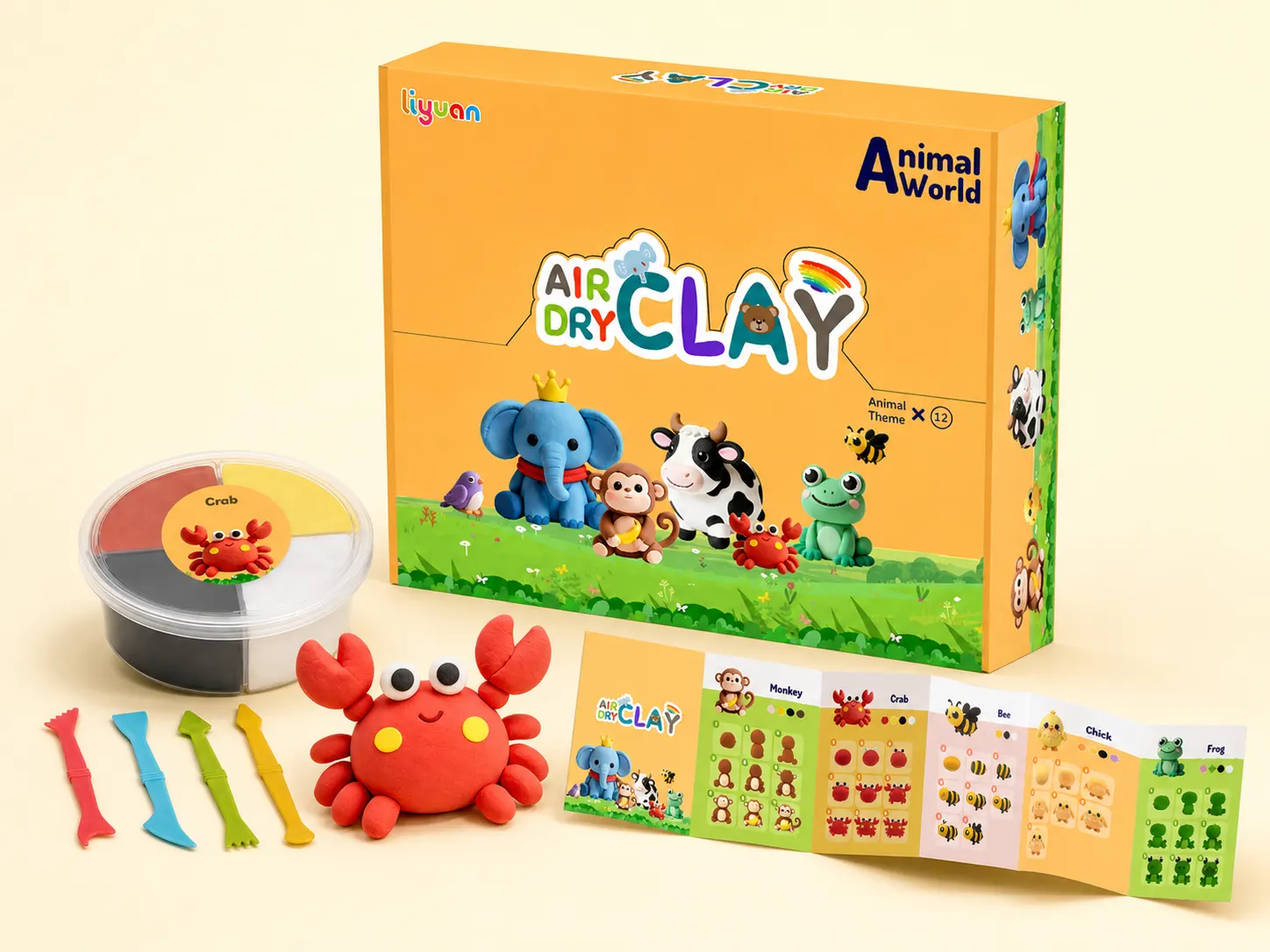
Set up a manageable modelling session
A kitchen table activity is easier when the adult begins with one animal and only the colours needed for that model. Let the child make the body first, then add ears, fins, wings, tails or spots. This uses the documented colour variety without making the first session feel like a sorting exercise.
The product page does not specify mess, washable behaviour or age suitability. Use the same sensible surface protection and supervision you would use for another hands-on craft material. Keep the clay away from food and do not claim a safety property that the page does not state.
- Choose one animal prompt and two or three starting colours.
- Place the colour box and a wipeable work surface within reach.
- Shape the main body before adding small details.
- Pause if the child needs help or if any material property is unclear.
- Store or dispose of the result according to confirmed material guidance.
Read the 24-colour claim correctly
Twenty-four colours can make animal details easier to imagine: stripes, spots, eyes, shells or feathers do not all need to be made from one base colour. The confirmed count is useful for comparison, especially against a single-colour block or a general craft bundle.
Colour count is not the same as quantity or performance. The manufacturer does not specify the weight of each colour, blending, softness, working time or the number of models the set can produce. A family session with several children may need more material than the page allows you to predict.
Limits and checks before buying
Shortlist this set when the job is an open-ended animal craft with lightweight modelling clay, clear colour choice and a boxed format. Look elsewhere when you need pottery clay, oven-bake polymer clay, tested classroom quantities, exact age labelling or a documented accessory pack.
The manufacturer does not specify non-toxicity, safety certification, food safety, drying time, final hardness, durability, tools or instruction cards. These are not minor wording gaps if they control the intended use. Ask for them or choose a product whose page confirms them directly.
Related guides and product details
Choose the set for its confirmed animal theme, lightweight clay, 24 colours and box; add no extra promise about tools, safety or finished results. Read Kids Craft Clay Set with Animals: A Practical UK Buyer Guide for related guidance. Read Air-Dry Modelling Clay Set for Kids: Check the Material First for related guidance. Review the documented specification on the 24-Colour Lightweight Animal Modelling Clay Set product page before ordering.
Sources and safety context
- Supports the animal theme, lightweight clay, 24 colours and colour-box presentation. Current Airclay lightweight modelling clay set product page.